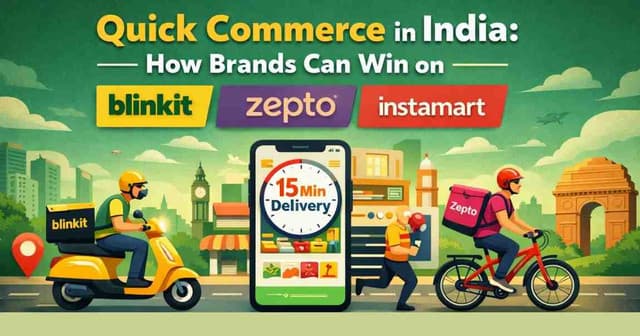
Quick Commerce in India: How Brands Can Win on Blinkit, Zepto & Instamart
Learn how brands can grow sales on quick commerce platforms in India using smart pricing, ads, listings, and supply chain strategies.
Introduction
Quick commerce is no longer an experiment in India. It is now a serious revenue channel for FMCG, D2C, and emerging consumer brands. With delivery promises of 10 to 20 minutes, platforms like Blinkit, Zepto, and Instamart have changed how consumers shop for daily essentials.
For brands, this shift comes with opportunity and risk. Visibility is limited. Competition is intense. Margins are tight. But brands that understand how quick commerce works can unlock rapid scale and high purchase frequency.
This blog breaks down how quick commerce works in India and what brands must do to win on these platforms.
What Is Quick Commerce and Why It Is Exploding in India
Quick commerce, often called Q-commerce, refers to ultra-fast delivery of essentials through local dark stores. Unlike traditional e-commerce, orders are fulfilled from nearby micro-warehouses instead of large regional warehouses.
Why Q-Commerce Works in India
India is uniquely suited for quick commerce due to:
Most Q-commerce orders are impulse driven. Users open the app because they need something now, not because they are browsing.
That behavior changes how brands must approach marketing and operations.
Why India Is Leading the Global Q-Commerce Wave
India has become one of the fastest-growing quick commerce markets globally because it combines:
For global brands, India is not just another market. It is a testbed for high-frequency, speed-led retail.
Understanding the Quick Commerce Business Model
To succeed, brands must first understand how these platforms operate.
Dark Store Led Fulfillment
Blinkit, Zepto, and Instamart operate through dark stores placed within 2 to 3 km of customers. Only products stocked in that store are visible to the user.
If your SKU is not available in the nearest dark store, you do not exist for that customer.
Algorithm Driven Visibility
Product ranking depends on:
Brand loyalty matters less than convenience and availability.
How Consumer Behavior Differs on Blinkit, Zepto & Instamart
Quick commerce shoppers behave differently from traditional e-commerce users.
Key Behavioral Insights
This means brand discovery is limited but retention is strong once trust is built.
Key Challenges Brands Face on Quick Commerce Platforms
Before scaling, brands must address these challenges.
1. Limited Digital Shelf Space
Unlike Amazon or Flipkart, you do not get endless category pages. Most categories show only 8 to 12 products per screen.
2. High Platform Margins
Commissions, logistics fees, and ad spends can eat into margins quickly. Without tight cost control, profitability suffers.
3. Inventory Fragmentation
Stock must be planned city by city and dark store by dark store. Poor forecasting leads to stock-outs or dead inventory.
Winning Strategies for Brands on Blinkit, Zepto & Instamart
1. Focus on High Velocity SKUs
Do not list your entire catalog.
Start with:
Quick commerce rewards speed of movement, not variety.
2. Optimize Product Listings for Conversion
Since browsing time is low, listings must be extremely clear.
Best Practices:
Avoid marketing fluff. Focus on clarity.
3. Win the Search and Category Rankings
Most users search generically, not by brand.
For example:
"Milk", "Chips", "Face wash", "Protein bar"
To rank higher:
Algorithms reward consistency more than one-time spikes.
4. Use Platform Ads Strategically
All major Q-commerce platforms now offer sponsored listings.
How to Use Ads Effectively:
Ads should support organic growth, not replace it.
5. Nail Demand Forecasting and Supply Chain
This is where many brands fail.
Best practices include:
Availability equals visibility in quick commerce.
Pricing Strategy for Quick Commerce Success
Pricing on Q-commerce is different from marketplaces.
Key Pricing Principles:
Consumers pay for speed. Use that to protect margins.
How D2C and Emerging Brands Can Compete with Big FMCG

Quick commerce is one of the few channels where new brands can compete with established giants.
Why New Brands Can Win:
Many brands have achieved city-level dominance before expanding nationally.
Measuring Success on Quick Commerce Platforms
Do not rely only on GMV.
Track these metrics weekly:
Quick commerce is an operational game as much as a marketing one.
The Future of Quick Commerce in India
Quick commerce will not replace traditional e-commerce. It will complement it.
Expected trends include:
Brands that build strong early relationships with platforms will have a long-term advantage.
Final Thoughts
Quick commerce in India is still evolving, but the rules are becoming clear. Brands that treat Blinkit, Zepto, and Instamart as serious growth channels, not experimental listings, will win.
Success depends on speed, clarity, availability, and execution. Not brand size.
If your brand can deliver value in under 15 minutes, you are already halfway there.
Frequently Asked Questions (FAQs)
What is quick commerce in India?
Quick commerce refers to ultra-fast delivery of essentials, usually within 10 to 20 minutes, through local dark stores operated by platforms like Blinkit, Zepto, and Instamart.
Is quick commerce profitable for brands?
It can be profitable if brands manage inventory efficiently, control ad spend, and focus on high-velocity SKUs.
How can new brands get listed on Blinkit or Zepto?
Brands can approach platform category managers directly or through approved distributors with existing dark store supply networks.
Are ads necessary on quick commerce platforms?
Yes. Ads help with initial visibility and ranking, especially for new listings, but should be used strategically.
Which products perform best on quick commerce?
Daily essentials, snacks, beverages, personal care, and impulse-buy items perform best due to high repeat demand.